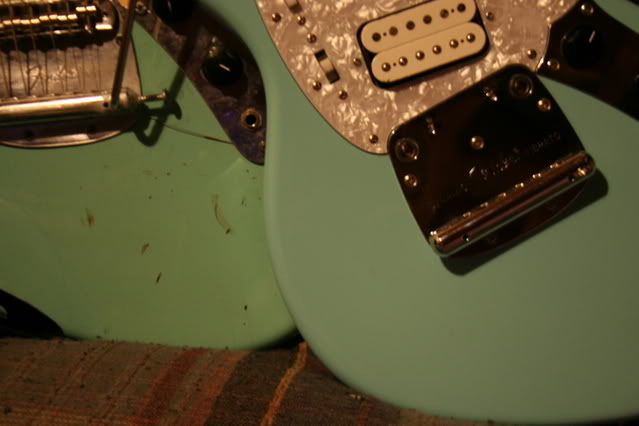
Looks like you smash cigarette butts out on the back of your guitar 😁
I found this... fretnotguitarrepair.com
"Finish Checking (Crazing)
This is an extremely common, somewhat expected condition in older instruments with lacquer finishes, though it will vary according to the extremes the instrument has been through. An instruments wood is continually expanding and contracting based on it's environment and the moisture level in the wood. The lacquer itself is put thru allot of stress as this takes place and the finish may develop checking/crazing is a result of this movement. Checking looks like very fine finish cracks running in all directions.
Extreme and sudden temperature changes can also cause finish checking, regardless of the instruments age.
Lacquer naturally yellows with age and finish checking is a common occurrence on vintage instruments.
How do I stop finish checking?
If you travel with your instrument and it is subject to severe temperature changes, you should make it a common practice to allow it to acclimate to room temperature before opening the case. When instruments are shipped to me they are left unopened until I am sure the contents have had the opportunity to warm to room temperature. You should follow the same procedure when traveling with your instruments.
Since complete refinishing is the only remedy to repair it and because the majority of your instruments with lacquer finishes suffer the same fate, refinishing is not advised.
Below you can see an example of finish checking. Click to enlarge.

Checking/Crazing
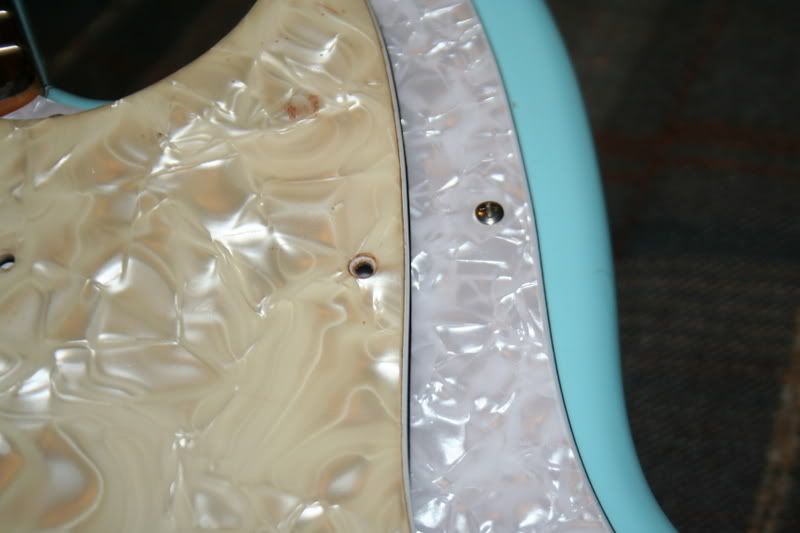
Yellowing Lacquer
Instruments finished in nitrocellulose lacquer not only tend to craze with greater ease than the newest catalyzed finishes but they also yellow with age. Instruments normally consist of a color coat and clear coat, with the exception of a natural finish which is just clear coated. This top clear coat will yellow with age. This can turn a white guitar yellow and, since blue and yellow make green...older blue instruments can eventually take on a much more green appearance. This phenomenon is a simple fact of life. While it's true that UV rays may accelerate the process (just peak under a pickguard), nothing can be done to stop nitrocellulose from yellowing. In fact, like crazing, it is a common and expected occurrence."
I can't imagine living up north again. I can count all the times it has snowed in the south, on one hand in 23 years. I'm gonna take a picture of that old checked up furniture if I can get it to show on the diggy cam.